The Craft of Attention

Reflections on self-leadership, becoming a beginner, and learning to see what is in front of me.
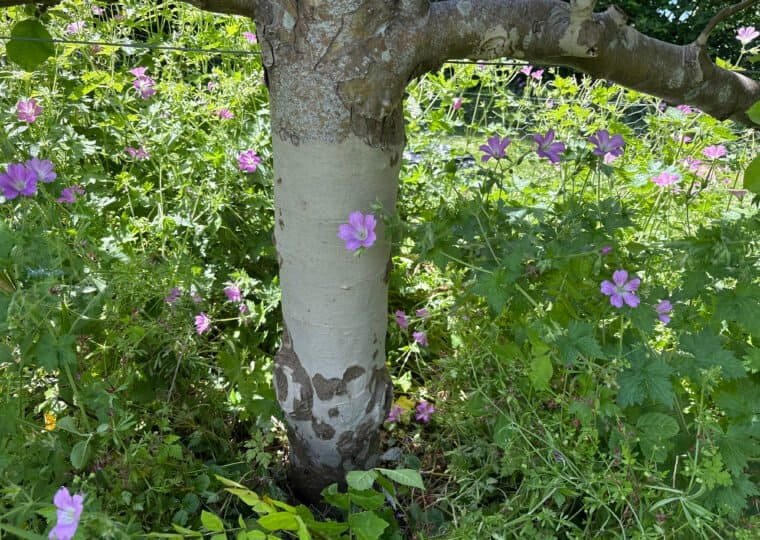
A newly planted seedling needs attentive care if it is to establish and flourish. Knowing how to grow it matters, but so does noticing: whether the soil is drying out, whether its leaves are changing, and whether it is ready for the next stage of growth.
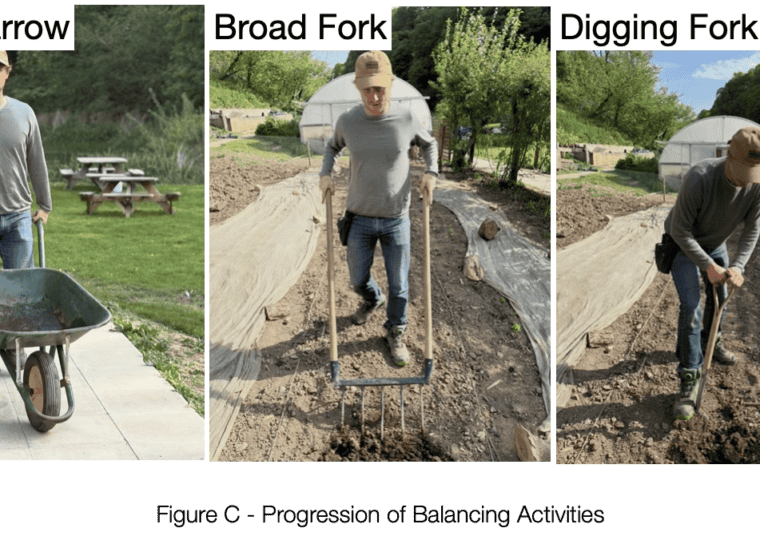
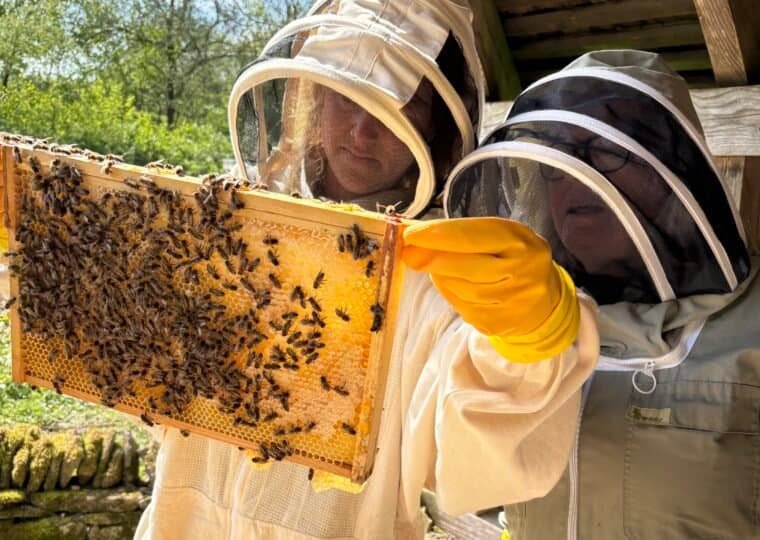
As a Valley Landscape tutor at Ruskin Mill College, I facilitate student experiences in the garden. My attention moves between students, plants, chickens and bees. Each asks something different of me, and what was appropriate yesterday may not be what is needed today.
Reflecting on the first two years of my MA, I have realised that one of its most valuable contributions has been to develop my attention. It has also opened a doorway to something more subtle: giving attention to my own attention.
Where am I directing it? What am I overlooking? How much of what I see is shaped by what I already expect to find?
These questions have brought attention and self-leadership closely together for me.
While researching this subject, I encountered Simone Weil. I was struck by her commitment to living out her philosophy, and particularly by her understanding of attention. Weil describes a way of holding our existing knowledge in reserve: available when needed, but without allowing it to fill the space in which something new might become visible.
For me, this means noticing the student in front of me today, rather than assuming yesterday’s understanding tells me everything I need to know. Experience can help me respond, but it can also encourage me to stop looking.
Self-leadership begins here: recognising an assumption, pausing, and choosing how to respond.
Much of contemporary life makes this difficult. The competition for our attention can feel almost spiritual, because what we repeatedly attend to helps shape our experience of the world and what we come to value.
I was around ten when the iPhone appeared. Since then, screens have become woven into everyday life. Short videos, notifications and endlessly scrolling feeds offer something new at almost every moment. I recognise how easily I can move from one thing to another without fully attending to any of them.
In my work, I also see how difficult some students find it to move their attention away from their phones and into the activity or relationships around them.
I use tools to help manage this myself. I block short-form video content and use a Pomodoro timer when studying: twenty-five minutes of focus followed by a short break. These measures help, but they also leave me with a question. Am I developing my attention, or simply arranging circumstances in which it is easier to concentrate?
Perhaps both are necessary. Choosing an environment that supports attention can itself be an act of self-leadership. The further task is to notice what happens when the timer stops and the distractions return.
The MA’s craft experiences brought a different aspect of attention into view.
I was excited to try the crafts, but also worried about not being good at them. Many of my peers were talented craftspeople, and I felt vulnerable. Statements such as “the materials never lie” could feel uncomfortable when I was already anxious about what my work might reveal.
That vulnerability helped me understand something about the students I teach. Approaching an unfamiliar craft can involve much more than learning a technique. It can mean risking failure in front of others. The tutor’s attention matters: noticing hesitation, offering support, and allowing enough space for the student to make their own discovery.
In the garden, my attention often moves across the landscape. Working with plants feels more forgiving to me. Making a stool brought me into a much narrower field of attention.
I became absorbed in the material in front of me and less aware of the other people in the room. This absorption was productive, but it also showed me how easily deep focus could reduce my awareness of the wider situation.
When I tried to explore the craft through Steiner’s twelve senses, I initially felt overwhelmed. I eventually narrowed my inquiry to sound, recording different stages of the process, from working the ash to shaping the stool’s legs.
The sound of the saw became something I could listen to with curiosity. This inquiry helped me explore the therapeutic possibilities of green woodwork through an aspect of the craft I might otherwise have overlooked.
It also changed my relationship with the task. As I became interested in the material, I spent less time worrying about myself.
This was my experience of the beginner’s mind, or shoshin. I could begin to ask what the craft had to teach me, rather than constantly judging how well I was performing.
I cannot simply decide to remain in this state. First, I have to notice when fear, comparison or certainty has taken over. That requires an awareness of how I am attending.
Otto Scharmer’s Theory U offers a related perspective. His account of leadership asks us to become aware of the inner place from which we act, and to move beyond repeating familiar patterns towards a more receptive engagement with what is emerging.
I recognise a connection with the Genius Loci work of the MA: spending time with a place, questioning first impressions, and allowing understanding to develop through encounter. Both invite me to stay with an experience long enough for it to challenge what I thought I knew.
Questions have been central to this process. I often struggled to begin an assignment until I had found a question that felt worth pursuing. Once I had one, my attention had somewhere to go.
A meaningful question keeps something open. Knowledge remains valuable, but it needs to stay responsive to experience. In my teaching, assuming that I already have the answer risks overlooking what a student is showing me.
Iain McGilchrist’s writing has also helped me reflect on the relationship between focused attention and a broader awareness of context. His account of hemispheric differences emphasises contrasting ways of attending, rather than a simple division of mental functions between two halves of the brain.
I find this a useful lens for considering my practice. Making a joint demands close attention to detail. Teaching in a workshop also requires awareness of the people, atmosphere and activity around it. In the garden, I need to notice both the individual seedling and the conditions of the bed in which it is growing.
The practical question is whether I can become deeply involved in a task and still recognise when the wider situation needs my attention.
The movement between theory and practice throughout the MA has repeatedly asked this of me: to enter into the detail, step back, and reconsider its relationship to the whole.
So what changes in my practice?
I want to pause before assuming that I understand a student’s behaviour. I want to notice when my focus on completing a task has displaced my awareness of the person doing it. I want to make room for curiosity when something feels unfamiliar, and recognise when my own anxiety is narrowing what I can see.
The MA has given me knowledge that I can draw upon. It has also helped me become more conscious of how I meet the world.
For me, this is an ongoing practice of self-leadership. It begins in ordinary moments: listening to a student, working a piece of wood, tending a seedling, or noticing that my mind has already moved elsewhere.
Each offers an opportunity to return, look again, and allow what is in front of me to matter.