
“Plants should take in elements via humus and not through the soil water” – Rudolf Steiner
In the Agriculture Course, Steiner speaks of the soil becoming deaf to the forces of the cosmos. Exploited soil, or soil exposed to artificial fertilisers, gradually loses its vitality and can eventually become lifeless, losing its biological activity, including bacteria, fungi, microorganisms, and insects. In this article, I want to explore and understand what is an artifical fertiliser, how it’s made, and the impact that it has on the soil, using insights from the great biodynamic pioneer Alex Podolinsky.
Haber-Bosch Process
The Haber–Bosch process is an industrial method used to produce ammonia by combining nitrogen from the air with hydrogen gas. The reaction uses an iron catalyst and requires very high pressure and temperature. Developed by Fritz Haber and Carl Bosch in 1913, it enabled the large scale production of nitrogen fertilisers, which greatly increased global food production. However, the process is highly energy-intensive, which in recent years has led to price hikes. In the last month alone, the price has gone up 30%, as around 30–35 per cent of the world’s nitrogen fertiliser moves through the Strait of Hormuz. (Independent, 2026)
The Haber–Bosch process emerged during a period of pressure in both agriculture and warfare. In the early twentieth century, rapidly growing populations created an urgent need for increased food production, which required new sources of nitrogen fertiliser. At the same time, nitrogen compounds were also essential for producing explosives used in war. Natural sources such as Chilean nitrate were limited and vulnerable to disruption, leading Germany to develop a way of fixing nitrogen directly from the air.
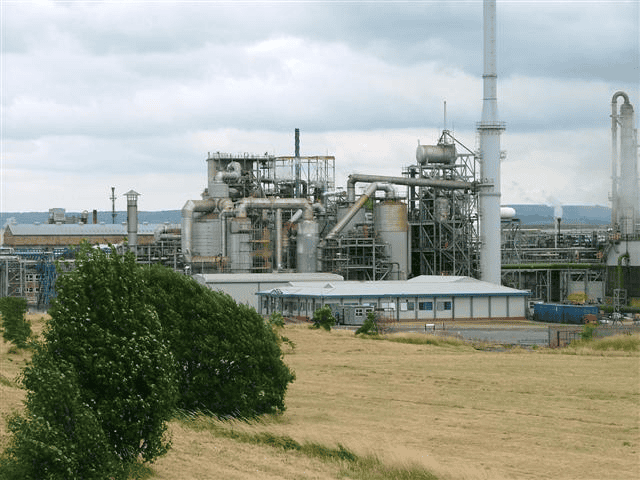
Billingham in the UK was an early site of Haber–Bosch ammonia production. The vast chemical works there helped inspire Aldous Huxley while writing Brave New World, which he described as “an ordered universe in the midst of a wider world of planless incoherence,” influencing his vision of a technologically controlled dystopian future.

“In the worst-case scenario, we will move towards a nitrogen-saturated planet, with polluted air, reduced biodiversity, increased human health risks and an even more perturbed greenhouse-gas balance. Food and military security were the key objectives for Haber. For us, global environmental sustainability must surely be the main driver for future innovation. Examples of key advances to aim for include improving nitrogen-use efficiency and reducing dependency on nitrogen-intensive biofuels, as well as developing a comprehensive supply of protein and amino acids with greatly improved efficiency compared with traditional agricultural systems. It will be interesting to look back a century from now: will another patent have changed the world to the same extent as the one Fritz Haber filed a hundred years ago?”
(Erisman et al., 2008, p. 639).
Despite the environmental concerns surrounding synthetic nitrogen fertilisers, the Haber–Bosch process has also become deeply embedded within modern human life. It is widely credited with enabling the dramatic growth of the global population. As Smil notes, our bodies are “built of amino acids whose nitrogen came—via plant and animal foods—from the Haber–Bosch synthesis. Virtually all the protein needed for the growth of 2 to 4 billion children to be born during the next two generations will have to come from the same source, from the synthesis of ammonia from its elements” (Smil, 2001).
Artificial Fertilisers and Their Effects on Plant and Soil Health
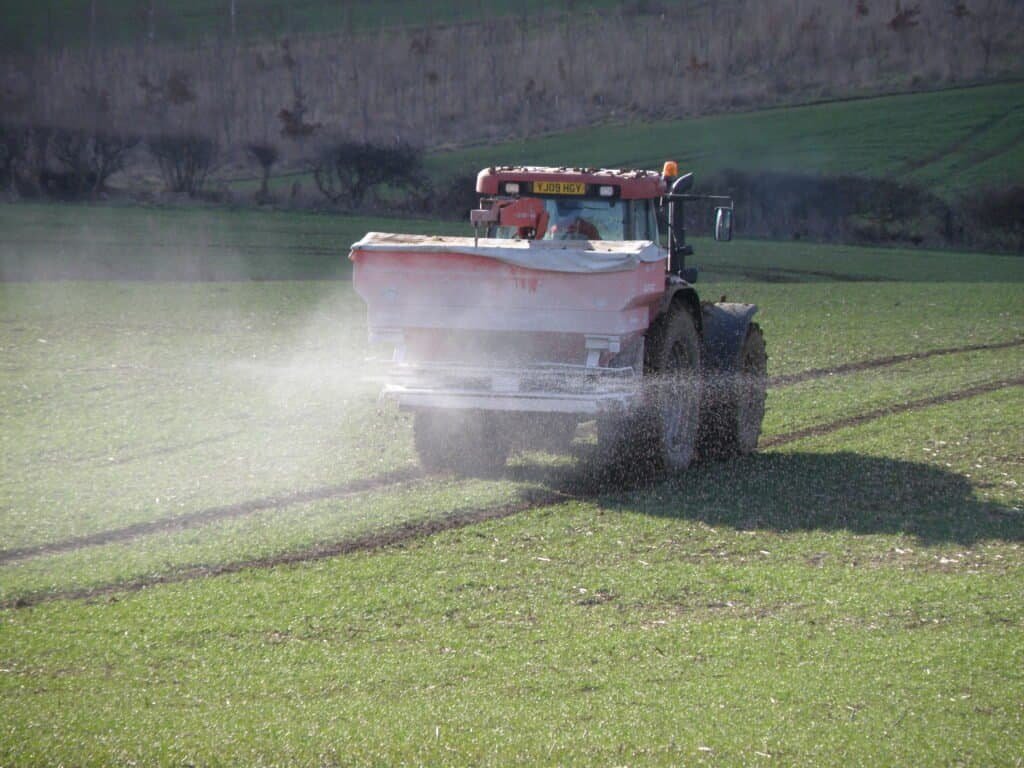
The Haber–Bosch process produces ammonia, which is then used to manufacture many synthetic nitrogen fertilisers, including ammonium nitrate, ammonium sulphate, and urea.
The widespread use of synthetic fertilisers in modern agriculture has significantly altered the relationship between plants and the soil that nourishes them. Artificial nitrogen fertilisers, derived from the Haber–Bosch process, are highly water soluble. When applied to the soil, rainfall dissolves these mineral salts and distributes them through the soil water. As plants draw water from the soil for transpiration, they are therefore forced to absorb these dissolved nutrients directly through the water rather than through the living processes of the soil.
This represents a fundamental shift in how plants are nourished. In natural soil systems, nutrients are gradually released through biological processes involving microbes, worms, and the decomposition of organic matter within humus. The plant’s fine feeder roots enter these humus pockets and absorb nutrients in response to the warmth and life processes of the soil. However, when soluble fertilisers dominate the soil water, plants absorb nutrients regardless of these natural regulating processes, effectively bypassing the living soil system.
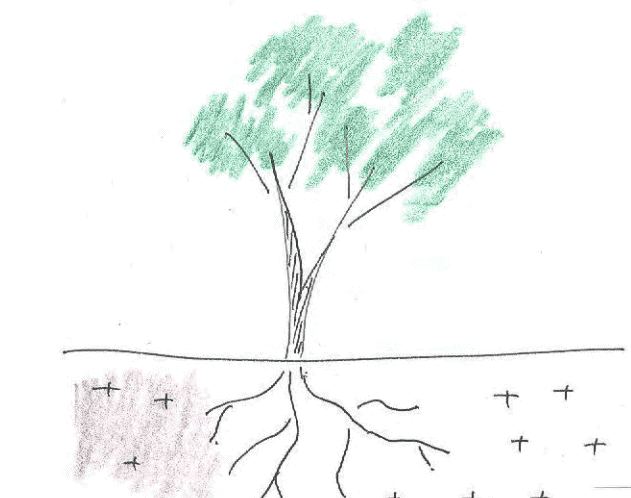
“Where the cell’s salt content is higher, sickness will occur. Plants, influenced by excessive Nitrogen absorption, grow fast; are overgrown.” – Alex Podolinsky
This has important consequences for plant growth. Podolinsky argues that plants supplied with excessive soluble nitrogen grow rapidly and appear lush. Yet this growth is accompanied by high water content and an imbalance within plant cells, which must maintain a delicate equilibrium between salt and water. When too many mineral salts are absorbed, plants become overfilled with water in order to maintain this balance. The result is plants that are structurally weaker, more susceptible to disease, and often lacking in flavour and nutritional quality, which is often the case when buying produce from a supermarket, even if by appearance it looks lush and appealing.
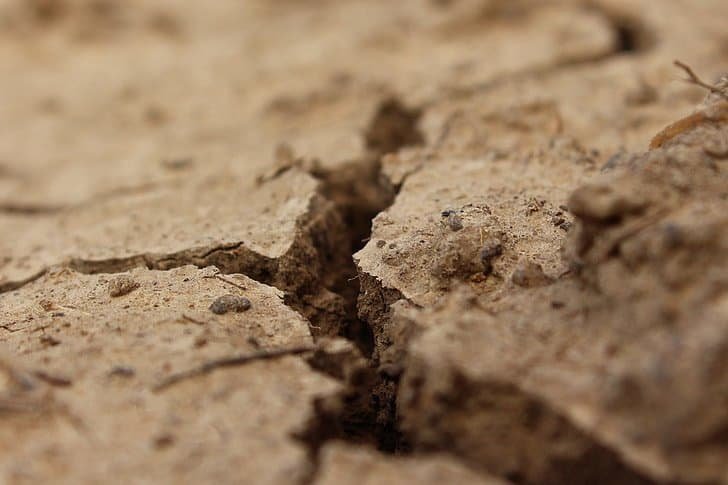
The soil itself begins to degrade. Without the continuous formation of humus through biological activity, soil structure declines and becomes compacted. Bacteria and mycelial networks recede as plants, now receiving nutrients directly through soluble fertilisers, release fewer sugars into the soil through their roots. This creates a cyclical decline, reducing the organic and living matter within the soil. Podolinsky describes how soils subjected to modern fertiliser regimes often form hard, dense lumps that resemble cement rather than living soil. Such soils hold less water, support fewer organisms, and become increasingly dependent on further fertiliser and irrigation to maintain crop yields.
From a biodynamic perspective, the long-term health of agriculture depends on restoring the living processes of the soil. When plants are nourished through humus and soil biology rather than through dissolved salts in soil water, growth is regulated by the natural rhythms of warmth, light, and life in the soil, producing healthier plants and more resilient soils.
The biodynamic preparations, particularly cow horn manure (Preparation 500), are used to restore vitality to soils that have become depleted and lifeless through the long-term use of synthetic fertilisers.
UK food prices could spike as fertiliser supplies at risk due to Iran war. (2026). Retrieved from https://www.independent.co.uk/news/uk/home-news/food-prices-rise-fuel-fertiliser-farming-hormuz-iran-b2938121.html
Podolinsky, A. (2000). Bio-dynamics: Agriculture of the future. Bio-Dynamic Agricultural Association of Australia.
Smil, V. (2001). Enriching the Earth: Fritz Haber, Carl Bosch, and the transformation of world food production. MIT Press.
Erisman, J. W., Sutton, M. A., Galloway, J., Klimont, Z., & Winiwarter, W. (2008). How a century of ammonia synthesis changed the world. Nature Geoscience, 1(10), 636–639.
Recent Posts
The student study arose from indications given by Rudolf Steiner (Steiner, 1919; Wiehl et al., 2020, pp. 176–179). It is used in Waldorf schools, and the format has been adjusted incrementally at...
In old times, humanity had an instinctive relationship with the cosmos, and agriculture was conducted with deep reverence for these rhythms. The peasant farmer was deeply attuned to them.“Let...